Happy 250th: Five Dispatches From Everywhere Else
Happy 250th, America. I mean that. I was sworn in as an American citizen in a Brooklyn courthouse in 1991 — during the John Gotti trial, of all things — having arrived from Germany in 1977 and spent fourteen years becoming, undeniably, an American. I feel like my patriotism has been earned over 35 years, not inherited. And earned patriotism, I've found, is entirely compatible with looking everywhere else, for inspiration, for juxtaposition. So that's what this issue does. While the fireworks go up and the hot dogs go down, I went looking at what the rest of the world has been making. The short version: quite a lot.
There is no American story in here. Not today. Instead there's a theatre in Brisbane wearing its glass like moving water, made possible by Chinese manufacturing and a Norwegian-Australian design partnership. There's Björk in Reykjavík, shown not as a singer with hobbies but as an artist whose songs leak into painting and video and refuse to stay in their lane. There's a Norwegian artist who built her own crystal radio to turn the Northern Lights into sound, and a New Zealand photographer lighting extinct birds so tenderly they seem to breathe. Even the one piece pointed squarely at American politics — Jenny Holzer's show — is hanging in Porto, made by an American working abroad and seen through foreign walls.
The thread is simple. The world is large, the work is good, and 250 years is a long time for everyone else to have been at it too. This week, no fireworks. Just things people elsewhere have quietly been building while we weren't watching. Pour yourself something cold and come look.
Subscribe to 'The Intersect: Art in Tech and Tech in Art' podcast, a companion audio feature where we explore each week's topics in a conversational format.
TECHNOLOGY IN MUSIC

Björk in Iceland: When the Music Refuses to Stay Music
Happy 250th, America. To mark it, we're spending this whole issue looking for international inspiration — and we start in Reykjavík, where Björk has spent a career refusing to keep music inside music.
Craig McLean's piece for Wallpaper walks through two exhibitions at the National Gallery of Iceland, where Björk is shown not as a singer with side projects but as an artist working across painting, video, and music at once. The framing is simple and right: everything radiates out from the songs, and nothing stays in its lane.
Her music isn't for everyone, and I'll happily admit that. But what I love here is how the show refuses to separate the parts. The wardrobe, the instrument choices, the visuals built to sit alongside the sound — they're not decoration around the music. They're the same idea wearing different clothes. That interconnected quality is the whole point of her work, and it's the thing most "multidisciplinary" artists only gesture at.
The National Gallery of Iceland celebrates the multifaceted nature of Björk's creativity with two exhibitions.
Most of us treat our disciplines like rooms with doors. Björk seems to have knocked the walls down decades ago and just kept rearranging the furniture, which is harder and stranger than it sounds.
When a song stops being only a song, where exactly does the artwork begin? Hold onto that question. The rest of this issue keeps running into the same blurred edge — from glass that learns to ripple to a Norwegian artist tuning a homemade radio to the sky.
Turning the Northern Lights Into Sound, With Caveats
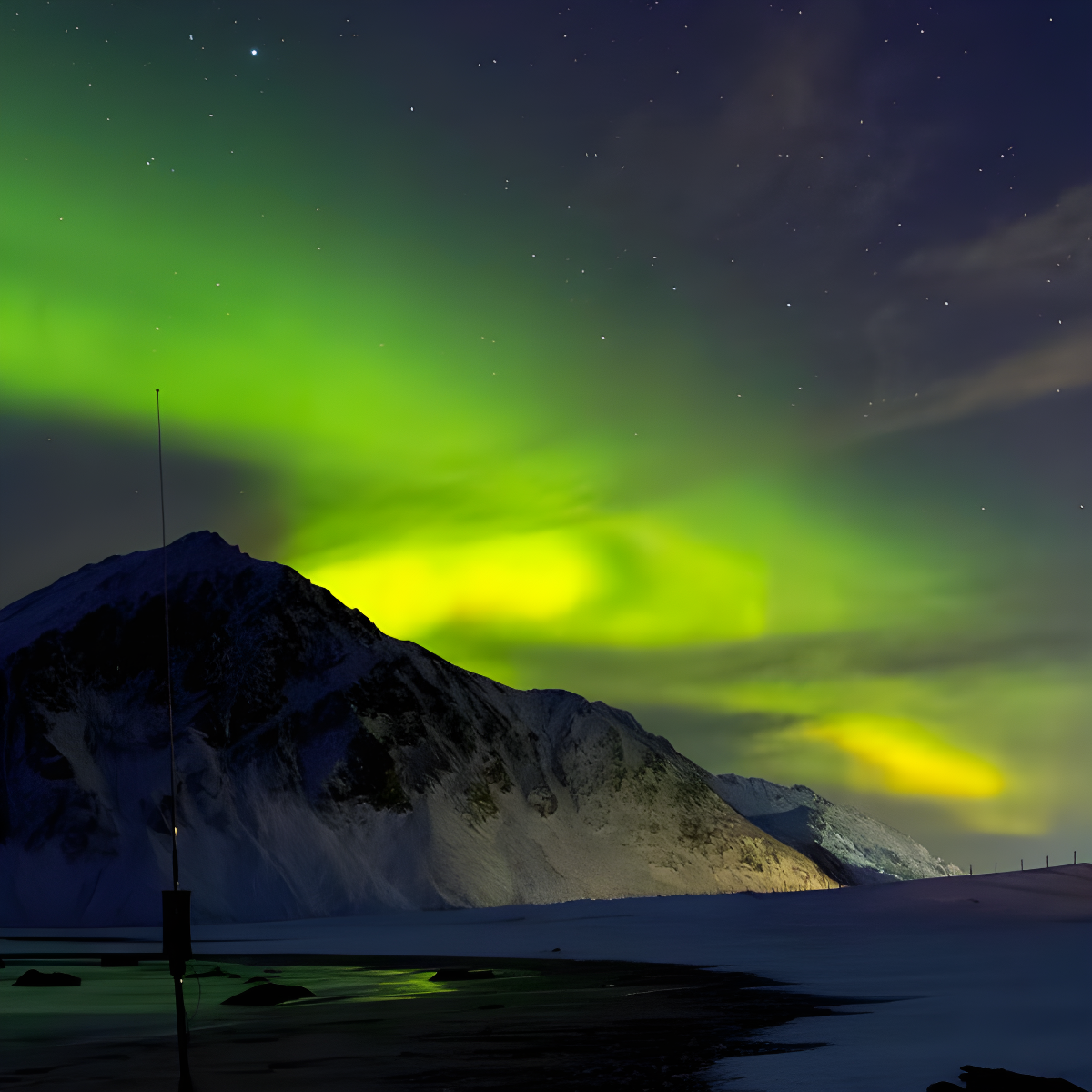
Stop number four on our tour of everywhere-but-here lands in Norway, where the sky itself becomes the instrument. Neural Magazine's review of Marta Zapparoli's Interdimensional Generated Space sent me down a genuinely fascinating rabbit hole. The concept is hard not to love: field recordings captured in Norway, woven together with studio sessions via a self-built crystal radio, light detectors, motors, and antennas — all in service of transposing the Aurora Borealis into sound. Released on Dissipatio, the Italian experimental label run by Nicola Quiriconi, the work sits at that precise intersection of natural phenomenon and technological mediation that I find almost irresistibly compelling.
Here's the honest truth though: I love the idea considerably more than I love the actual listening experience. I pulled it up on Bandcamp with genuine anticipation, and what came back was... fine? Interesting the way a physics lecture is interesting — intellectually, at arm's length. Not unpleasant, exactly. But not something I'd put on while cooking dinner, or really any other time I can think of.
The piece exploits the contrasts between invisible processes and sensory perceptions, creating an unprecedented experience of space, time and human scale.
That tension — a process that's conceptually rich, a result that's experientially thin — is one I bump into constantly in experimental sound work. The apparatus is extraordinary. The intent is serious. And yet the ear wants what the ear wants. After Björk bending every art form into the next, here's the quieter version of the same global ambition: someone building her own radio to hear the light. Does the gap between compelling concept and compelling experience matter, or is the documentation of the attempt the whole point?
PHOTOGRAPHY
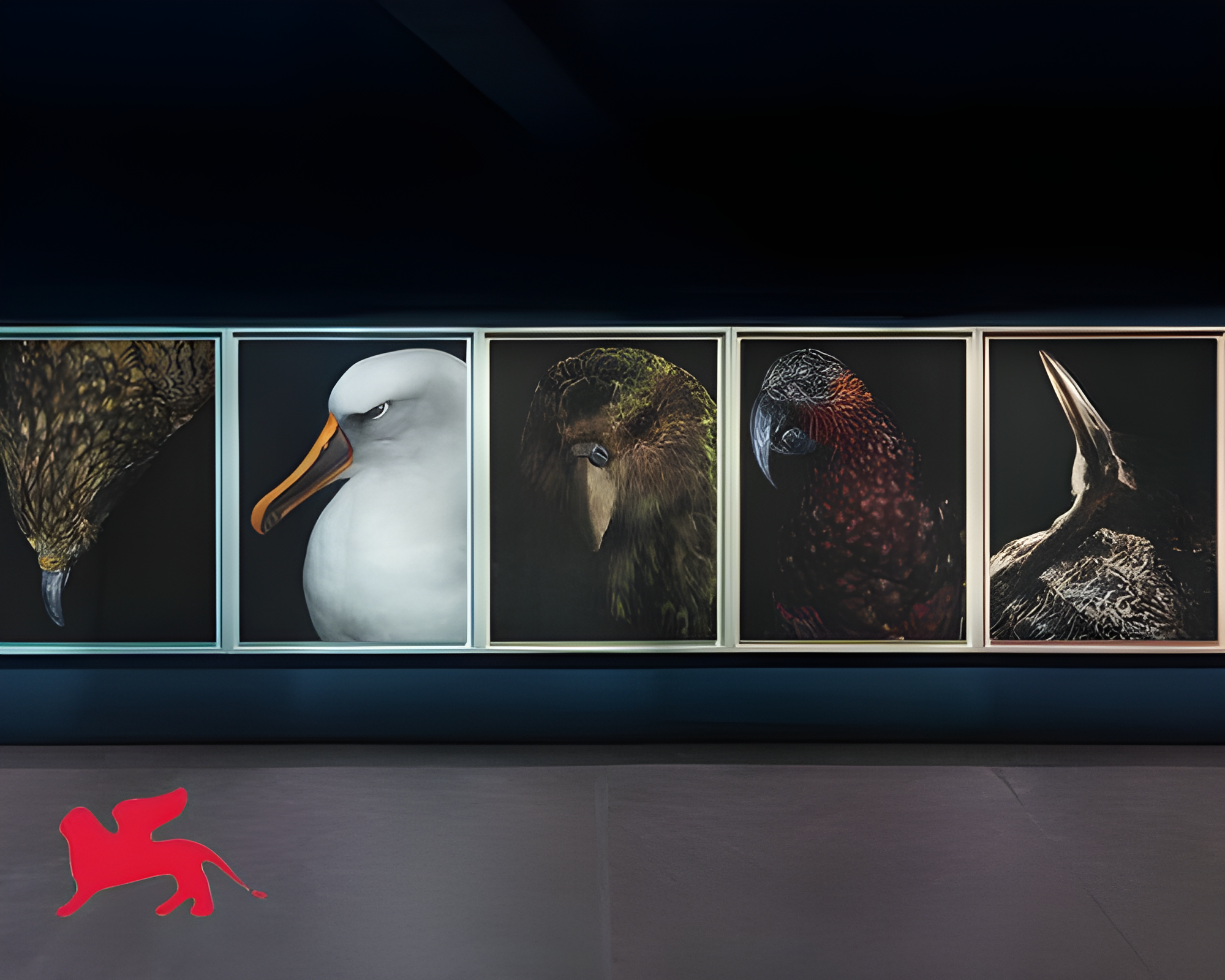
Dead Birds, Soft Light, and the Quiet Case for Photography Without Algorithms
Two stories into a global roundup that has already turned music into landscape and the Northern Lights into sound, here's a deliberate change of register. Thomai Tsimpou's piece at designboom walks through Fiona Pardington's Taharaki Skyside, the Aotearoa New Zealand pavilion for the Venice Art Biennale 2026. Working with Neil Pardington, Pardington photographs taxidermied birds — the extinct huia, the laughing owl, species still teetering — pulled from museum collections and lit so tenderly they seem to breathe. Endangered specimens become portraits, and colonial collecting, ecological loss, and Māori understandings of manu as spiritual messengers all sit inside the same frame.
Here's what catches me, and I'll admit it's a slightly contrarian admission for a newsletter that lives at the intersection of art and machines: there isn't an algorithm in sight. This is large-scale printing, soft lighting, patient post-processing — craft that simply wouldn't have been easy, or possible, a couple of decades ago. The tech is real. It's just the quiet kind, the kind that serves the subject instead of announcing itself. A genuinely poignant, deliberately non-AI use of photography to hold the fact of species loss.
Signs of taxidermic repair, stitched feathers, and worn surfaces remain visible in the photographs, acknowledging the fragility of the specimens and the histories attached to them.
I keep returning to those visible stitches — proof that someone tried to preserve what was already lost, and the camera chose to show the seams rather than hide them.
When did we decide that technology in art has to look like technology to count?
ARCHITECTURE
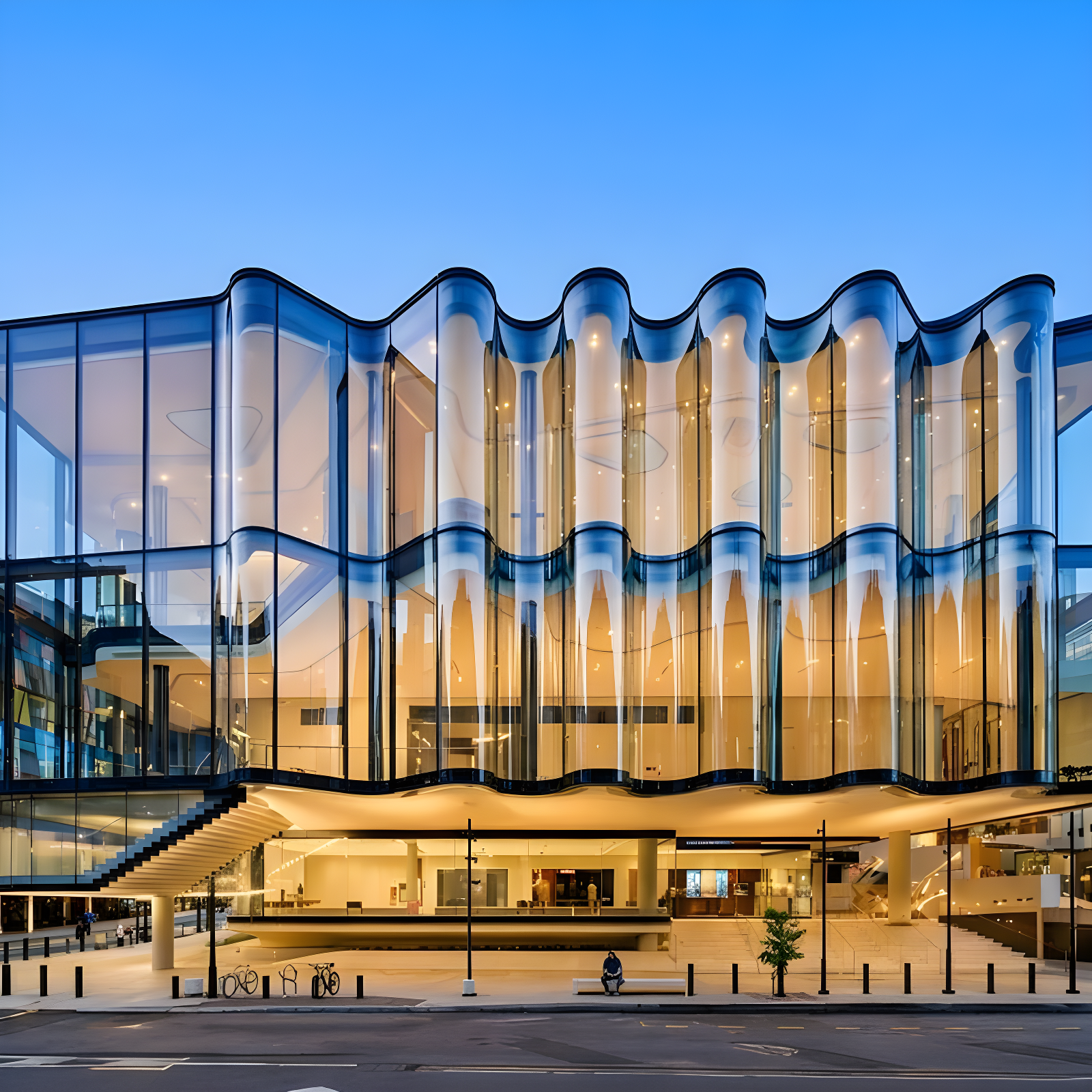
When the Glass Learns to Ripple: Tech Quietly Serving the Vision
After Iceland and the Northern Lights, we stay abroad — this time in Brisbane, where the rest of the world keeps quietly building remarkable things. A theatre there now wears its glass like moving water. Dezeen staff report on the Glasshouse Theatre, an extension of the brutalist Queensland Performing Arts Centre, designed by Blight Rayner Architecture with Snøhetta. The rippling facade leans on curved-glass technology from Chinese manufacturer NorthGlass, which can bend seven-metre panels while keeping them optically clean — no warping, no visible stress lines. The design itself nods to a prose poem by Murri artist Lilla Watson, about the Brisbane River and the fish moving beneath it.
Here is what pulls me in. I love it when technology bends toward the arts — and yes, I count architecture as art. But I keep snagging on the word "vision." We talk as if the artist had the vision first and the tools caught up. I think it runs the other way sometimes. The curved glass arrives, and suddenly a vision becomes thinkable that simply wasn't before. The capability shapes the imagination, not just the execution.
By reducing visible stress patterns and improving reflection clarity, the process allows the environment outside — the sky, street life and movement — to "read more continuously" across the theatre's wave-like glass facade.
That last detail is the part I find quietly satisfying: the best technical work here is the work you can't see. The river ripples; the engineering disappears. I would happily fly to Queensland just to stand in front of it. Chinese glass, a Norwegian studio, an Australian river — exactly the kind of thing you notice when you stop looking at your own backyard for a week.
So when the tool makes the vision possible, who exactly gets to claim the idea?
ART AND POLITICS
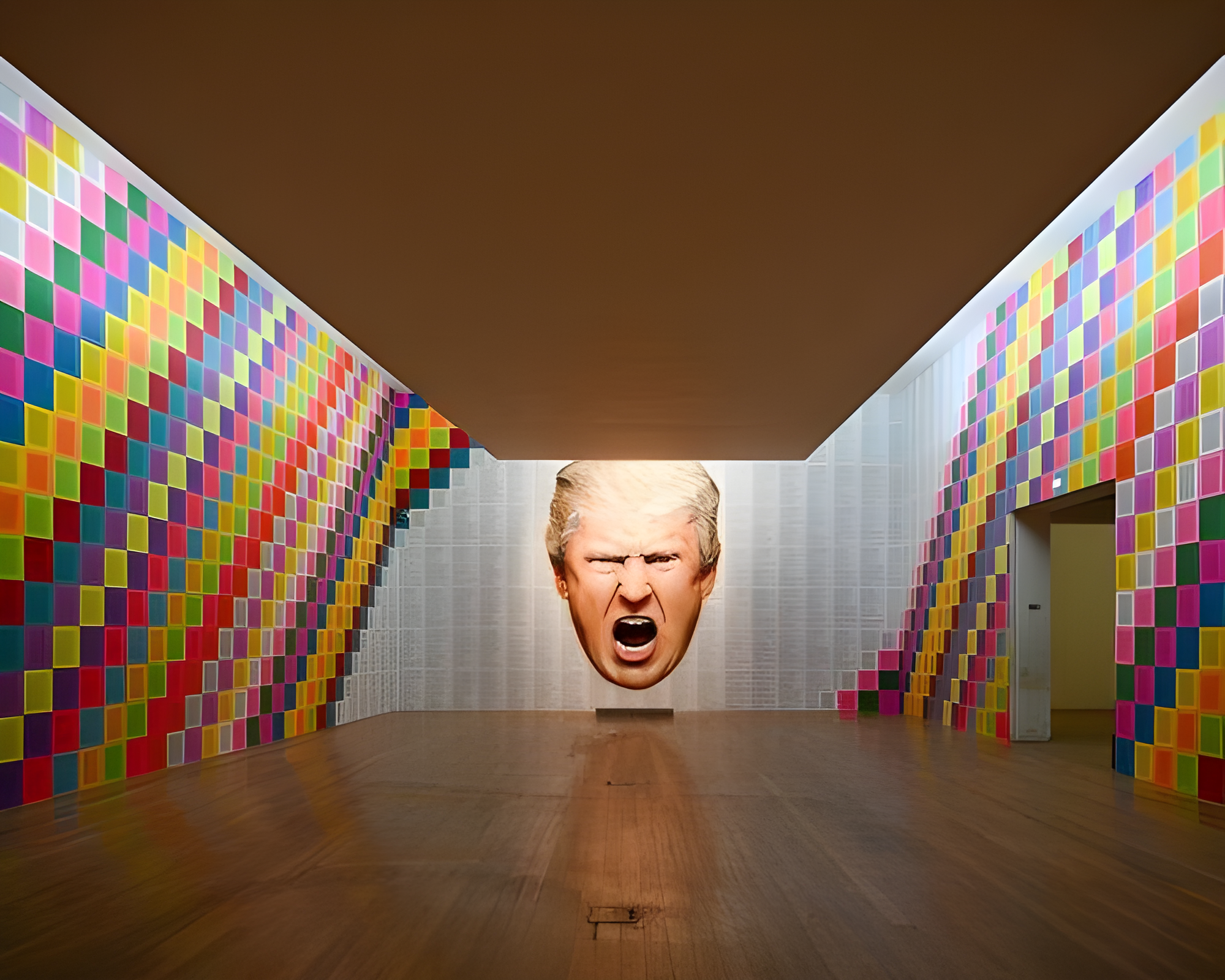
Jenny Holzer, Resistance, and Language as a Staged Technology
We close this global tour where it gets loud. Annalise Kamegawa's piece at designboom walks through Wrong Answers, Jenny Holzer's first solo show in Portugal, now open at Porto's Serralves Museum. Holzer brings out the full kit — spinning LED works, stone carvings, those acid-bright Inflammatory Essays — and points all of it squarely at the current American political moment. There's a golden canvas hung upside down referencing the note Trump received on January 6th. There's a face on the wall that bears a suspicious resemblance to the 45th and 47th president. Subtle, she is not.
There's a fitting twist for an issue that left America out of the lineup: here's an American artist staging her resistance from Porto. The patriotism, if that's the word, comes from looking back home with clear eyes from somewhere else. What pulls me in is the collaborative edge — Holzer working with graffiti and urban artists, the language spilling onto surfaces the way posters once colored 70s New York. I keep thinking about timing, too. We're working with a client, Arterial, on an upcoming exhibition called "Resistance," and this would have slotted in perfectly.
CHANGE IS THE BASIS OF ALL HISTORY, THE PROOF OF VIGOR.
I don't usually think of language as a technology. But watching Holzer stage words through neon, LED, and stone, I'm less sure of that line. The sentence is old; the apparatus carrying it is not, and the apparatus changes how the sentence lands.
So when does a word stop being a word and become a machine for moving people? Happy 250th. The work is good everywhere, and someone's always making it from the outside looking in.
THE LAST WORD
Thanks for taking the day off from the fireworks to look elsewhere with me. I had more fun assembling this issue than I expected — turns out the world is generous when you bother to look past your own backyard. I'm curious where your eye went this week. Was it the rippling glass in Brisbane, the Northern Lights turned to static, or something I undersold? Hit reply and tell me what you'd add to a global roundup. My list of countries I haven't covered is embarrassingly long.
Best,
Juergen